The Euro: How a Common Currency Threatens the Future of Europe by Stiglitz Joseph E
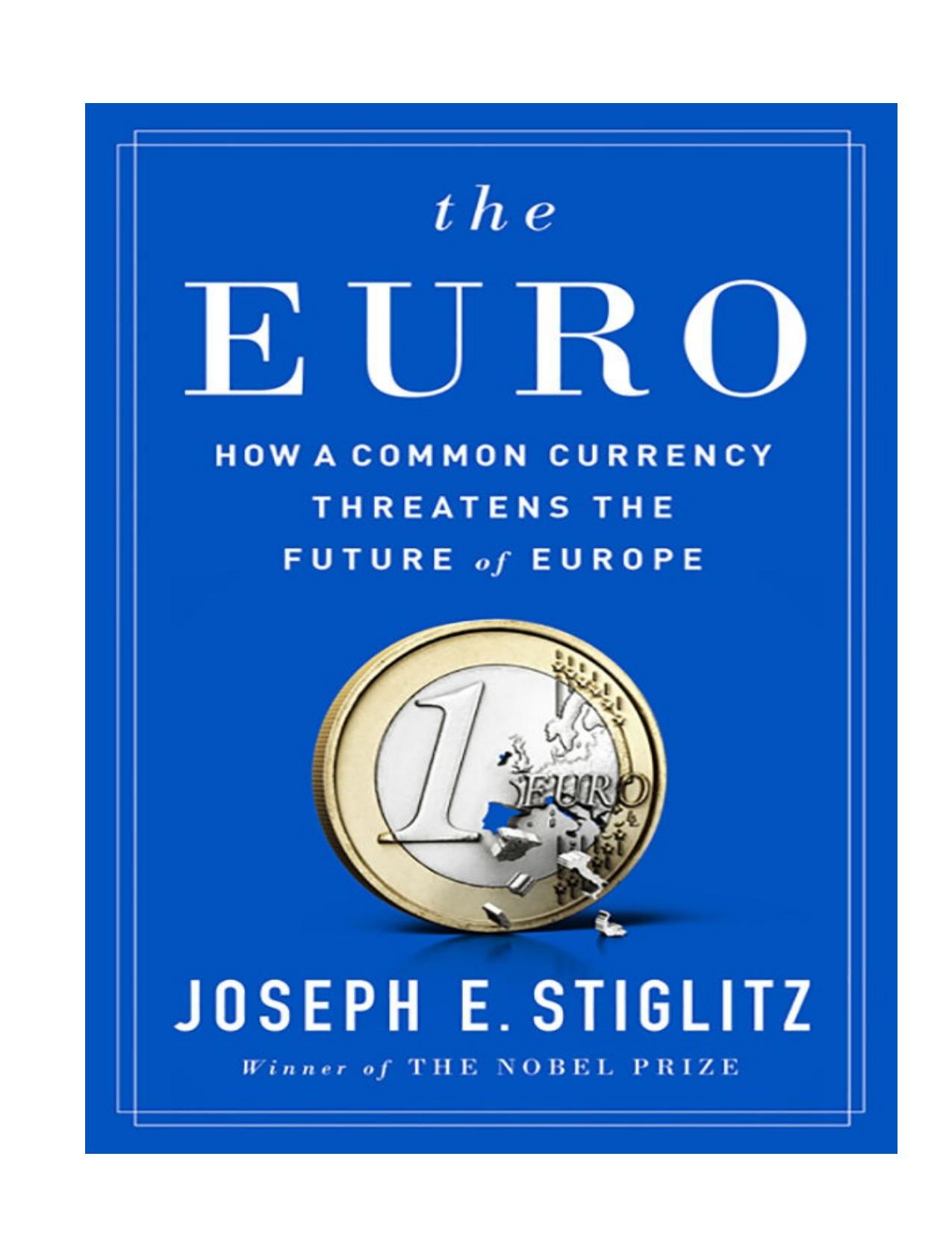
Author:Stiglitz, Joseph E. [Stiglitz, Joseph E.]
Language: eng
Format: epub, pdf
Publisher: W. W. Norton & Company
Published: 2016-08-15T22:00:00+00:00
PROMOTING EQUALITY
Markets, on their own, often produce excessively high levels of inequality—levels that are, or should be, socially unacceptable, and actually undermine economic performance. Sometimes this is because governments do too little to offset the intergenerational transmission of advantage.20 Sometimes this is because governments do too little to offset the agglomerations of political and economic power that can be self-perpetuating: economic inequality leads to political inequality, which leads to writing the rules of the market economy in ways that perpetuate and extend economic inequality in a vicious circle.21 Some of the crisis countries emerged from long periods of fascism, with relatively high levels of inequality, and it would take a concerted effort on the part of the government to create a more inclusive society.
But again, many of the Troika policies lead to more inequality and a less inclusive economy.22 Before the crisis, Spain was one of the success stories in bringing down wage inequality; since the crisis, inequality and poverty have been growing there as they have in the other crisis countries.23
In Greece, the Troika emphasized that the “fiscal adjustment is fairly distributed across the society, and protects the most vulnerable,” and that the “lowest-income and lowest-pension earners, as well as the most vulnerable and those requiring family support, will all be protected and compensated for the adverse impact of the adjustment policies.”24 Yet, as we have seen, well-being indicators have all pointed downward since the adoption of the program that was so confidently predicted to restore growth. By the end of 2014, some 36 percent of Greeks were “at risk of poverty or social exclusion.” The rate is the highest in the eurozone and some 10 percentage points higher than currency union’s average. The proportion of Greeks below the poverty line (50 percent of the median income) has also increased, from 12.2 percent in 2009 to 15.8 percent in 2014. This may not sound so dramatic until you remember that median incomes also decreased significantly; thus, the increase in the poverty rate shows the disproportionate burden of the Troika programs on those at the bottom.25
But the Troika not only did too little to help those at the bottom; they did too little to prevent the concentration of wealth and income at the top. There were alternative policies in which the burden of adjustment would have been more fairly shared, and in which the increase in poverty would have been smaller.26
Download
The Euro: How a Common Currency Threatens the Future of Europe by Stiglitz Joseph E.pdf
This site does not store any files on its server. We only index and link to content provided by other sites. Please contact the content providers to delete copyright contents if any and email us, we'll remove relevant links or contents immediately.
International Integration of the Brazilian Economy by Elias C. Grivoyannis(111068)
The Radium Girls by Kate Moore(12035)
Turbulence by E. J. Noyes(8057)
Nudge - Improving Decisions about Health, Wealth, and Happiness by Thaler Sunstein(7712)
The Black Swan by Nassim Nicholas Taleb(7137)
Rich Dad Poor Dad by Robert T. Kiyosaki(6645)
Pioneering Portfolio Management by David F. Swensen(6305)
Man-made Catastrophes and Risk Information Concealment by Dmitry Chernov & Didier Sornette(6023)
Zero to One by Peter Thiel(5807)
Secrecy World by Jake Bernstein(4756)
Millionaire: The Philanderer, Gambler, and Duelist Who Invented Modern Finance by Janet Gleeson(4482)
The Age of Surveillance Capitalism by Shoshana Zuboff(4308)
Skin in the Game by Nassim Nicholas Taleb(4256)
The Money Culture by Michael Lewis(4212)
Bullshit Jobs by David Graeber(4197)
Skin in the Game: Hidden Asymmetries in Daily Life by Nassim Nicholas Taleb(4012)
The Dhandho Investor by Mohnish Pabrai(3774)
The Wisdom of Finance by Mihir Desai(3752)
Blockchain Basics by Daniel Drescher(3586)
